
Google Ads vs Meta Ads is one of the most common questions that business owners and marketers ask when they are planning their advertising budget. Both platforms are powerful, both can bring in leads and sales, but they work in very different ways. Choosing between the two without understanding these differences can lead to wasted ad spend and poor results.
Whether you are a small business owner or someone managing marketing for a growing company, understanding the Google Ads vs Meta Ads comparison is important before you decide where to invest your money.
So let us break down the key differences between Google Ads and Meta Ads and understand which one might suit your business better.
Difference 1 – How People Are Targeted
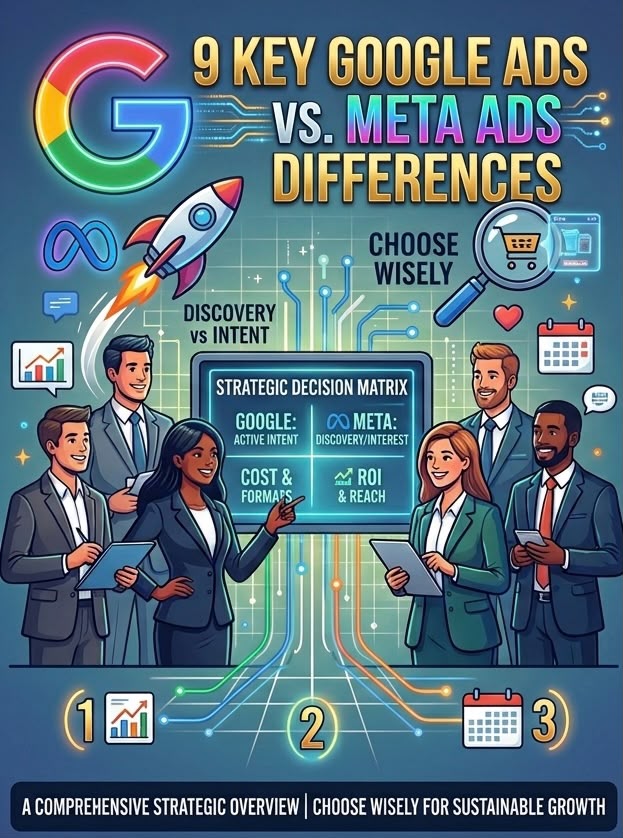
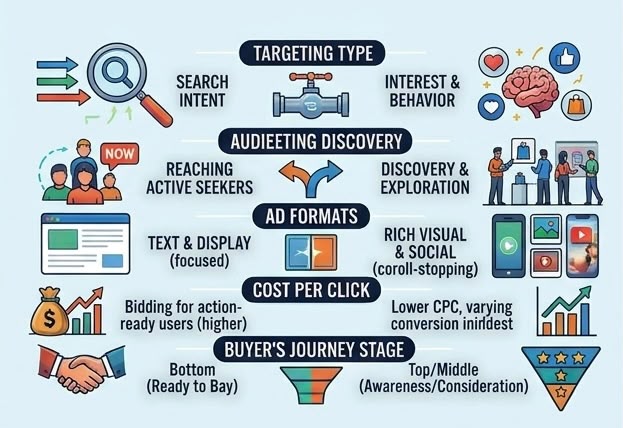
The biggest difference in the Google Ads vs Meta Ads debate is the way each platform finds your audience. Google Ads works on search intent, it shows your ad to people who are actively searching for something related to your product or service.
Meta Ads, on the other hand, works on interest and behaviour based targeting. It shows your ads to people on Facebook and Instagram based on their interests, age, location and online activity, even if they are not actively searching for anything at that moment.
Difference 2 – Intent Based Vs Interest Based Marketing
This leads to another important point in the Google Ads vs Meta Ads comparison, the difference between intent and interest. Google Ads captures people who already know what they want and are searching for it right now.
Meta Ads works more on discovery, it introduces your product or service to people who might be interested but were not actively looking for it. Both approaches have their own value depending on your marketing goal.
Difference 3 – Type Of Ad Formats
Google Ads mainly focuses on text based search ads, along with display ads, shopping ads and video ads on YouTube. The formats are more straightforward and focused on driving clicks from search results.
Meta Ads offers more visually engaging formats like image ads, carousel ads, video ads, reels and stories. Since Meta Ads runs on social media platforms, the content needs to be more scroll stopping and visually appealing.
Difference 4 – Cost Per Click Differences
When comparing Google Ads vs Meta Ads, cost is a major factor businesses consider. Google Ads generally has a higher cost per click, especially for competitive keywords and industries, because businesses are bidding for people who are ready to take action.
Meta Ads usually has a lower cost per click, but the conversion rate can vary since the audience is not always in an active buying mindset. Businesses need to test both platforms to see what fits their budget better.
Difference 5 – Stage Of The Buyer’s Journey
Another important difference in the Google Ads vs Meta Ads debate is the stage of the buyer’s journey each platform serves best. Google Ads works really well for the bottom of the funnel, people who are ready to buy or take action immediately.
Meta Ads works better for the top and middle of the funnel, building brand awareness and nurturing potential customers who may convert later. Many businesses use both platforms together to cover the full customer journey.
Difference 6 – Visual Appeal And Creativity
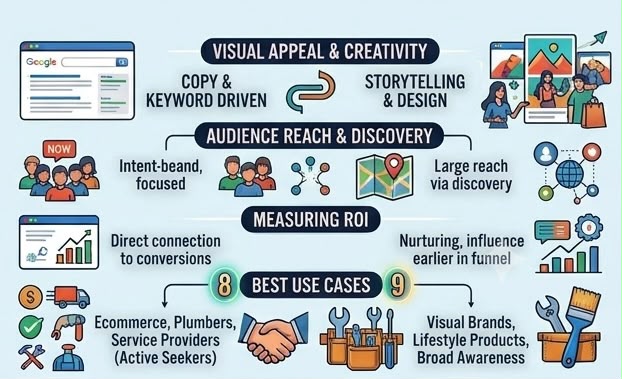
Meta Ads relies heavily on strong visuals, catchy captions and creative storytelling to grab attention while people are scrolling through their feed. The success of a Meta Ads campaign depends a lot on the quality of the creative.
Google Ads, in comparison, depends more on the right keywords, ad copy and landing page relevance rather than heavy visuals. This is an important factor to keep in mind while comparing Google Ads vs Meta Ads for your business.
Difference 7 – Audience Reach And Discovery
Meta Ads has a huge advantage when it comes to discovering new audiences. Since it runs on Facebook and Instagram, businesses can reach people who have never heard of their brand before, based purely on interest and behaviour.
Google Ads, being intent based, has a narrower reach since it only shows ads to people actively searching for something. This makes the Google Ads vs Meta Ads choice depend heavily on whether you want reach or intent.
Difference 8 – Measuring Return On Investment
ROI tracking looks a little different for both platforms. Google Ads makes it easier to directly connect ad spend to conversions since people click through with a clear intent to buy or inquire.
With Meta Ads, ROI can take a little longer to show up clearly since it often plays a role earlier in the customer journey, influencing decisions that convert later, sometimes even outside the platform.
Difference 9 – Best Use Case For Each Platform
The last point in the Google Ads vs Meta Ads comparison is understanding when to use which platform. Google Ads works best for businesses that offer products or services people actively search for, like plumbers, ecommerce stores or service providers.
Meta Ads works best for brands that rely on visual appeal, lifestyle products, or businesses trying to build awareness among a broader audience. In many cases, the smartest strategy is not choosing one over the other, but using Google Ads and Meta Ads together based on your marketing goals.
Which One Should You Choose?
At the end of the day, the Google Ads vs Meta Ads decision depends entirely on your business goals, budget and target audience. If you want quick leads from people who are ready to buy, Google Ads might work better for you.
If you are looking to build brand awareness, reach a new audience and tell your brand’s story visually, Meta Ads could be the better fit. Many successful businesses do not pick just one, they use both platforms strategically to cover different parts of their marketing funnel and get the best possible results.